
Avoiding 'fast fashion' to make clothes last longer
'Fast fashion' has been the buzz word for the past few years but what does it mean and why is it really that bad?
What 'fast fashion' means
Fast fashion is defined as the mass production of clothes that represent the latest trends at high speed and low cost.
The high speed production usually comes at a cost to the planet and to the people producing the garments. But the low cost of these clothes usually means that people buy far too many clothes that are often hardly worn.
Let's break the issues down a bit further and also suggest some solutions.
The problems with fast fashion
The problems with fast fashion include the following.
Production
Cheap clothes are usually produced in factories by underpaid, over-worked, yet highly skilled people.
You can read an in-depth article about these factory workers by the BBC.
Materials
The fabrics used are typically polyester. 70 million barrels of oil is used each year to produce the demand for polyester. Polyester can take 200 years to decompose in landfill.
But even cotton isn't ideal; 90% of cotton produced is genetically modified and use pesticides which kills wildlife.
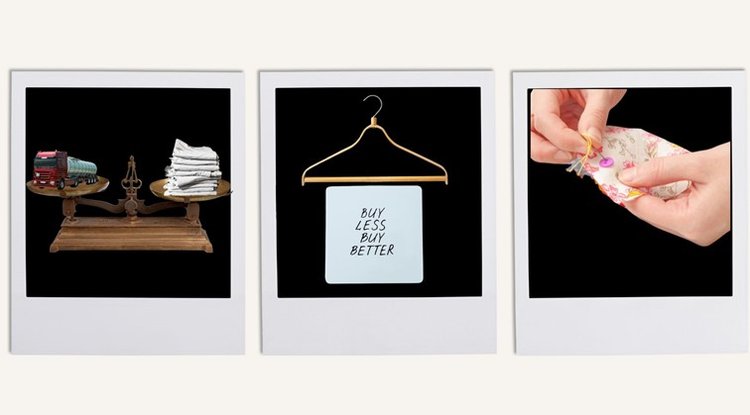
It takes 10,000 to 20,000 litres of water to produce 1kg of cotton (that's the equivalent of 1 tanker full of water to make 10 shirts!).
Pollution
Production of fabric is a huge carbon emitter, releasing the equivalent of 1.2 billion tonnes of CO2 into the atmosphere – more than international flights and shipping every year combined.
Tiny bits of polyester, shed from our clothes when washed, account for 85% of all human-made debris found on shorelines around the world.
Over-consumption
When fashion is fast, and trends are short lived, too many clothes are being produced, bought and wasted.
The low quality fabric can also mean items don't last; over 2,500kg of clothing becomes waste every second.
The solutions
Here's what you can do to avoid these problems.
Buy less
This is the basis of all waste reduction. It starts with when you buy it, not when you come to dispose of it.
Buy second-hand
With the rise in use of second-hand online shops (like Vinted) and high street charity shops becoming more like styled boutiques it's never been easier to buy second-hand.
Buy better quality
Look at what the clothes you buy are made from.
Opt for more sustainable materials, like organic cotton, linen and hemp or recycled polyester.
Make your clothes last longer
Learn to repair your clothes, which can reduce the CO2 impacts of each garment by 13.9kg!
Download our guide to simple repairs to get your started.
Or visit your local repair cafe, most have a sewing and textile repair areas where someone can help you.
The easiest trick is making sure you have a good quality, plain top that goes with everything else, simple!
Recycle
Recycle clothes when you no longer want or need them.
Clothing that is still in good condition can be donated to charity shops or sold (on websites like Vinted and Depop).
However even some charity shops are saying they now have too many items donated. Take your clothes to a textile bank. All 10 household recycling centres across Bucks have textiles bank. The items are sent for processing in a huge warehouse in Wolverhampton, they can even accept worn out items, for the rag market. Items that are heavily soiled (for example, with paint or oil), ripped or are single items (of a pair) cannot be donated and should be turned into cleaning cloths at home or put in the waste bin.
Find out more about where textiles go. And you can read a detailed breakdown from the reprocessors for more information.
View more information
Sources and further reading: