
Reusable nappies
All you need to know about reusable nappies including the different types available and our discount scheme.
Reusable nappies (also called cloth nappies) are nappies usually made from cotton, bamboo or hemp that can be washed and reused multiple times. They usually have different absorbent layers and are available with different patterns and designs.
Different types
Read about the different types of reusable nappies in the dropdowns below.
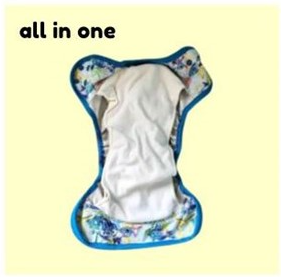
All-in-one reusable nappies have layers which are permanently attached (the waterproof layer and the absorbent layer).
These can be the simplest to use because the entire nappy can be washed. So there's no different layers to remove, like with other types of reusable nappies.
These are the most similar to disposable nappies (except you don't throw them away!).
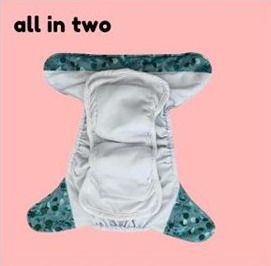
All-in-two reusable nappies have a waterproof cover, but the absorbent layer inside can detach. This means the cover can sometimes be reused before washing.
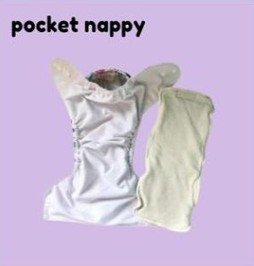
Pocket nappies have a waterproof cover and a pocket section to add additional absorbent inserts. This means the insert needs to be removed (but still washed, as a separate item with the rest of the nappy).
The main benefit is that they don’t take as long to dry.
Fitted nappies are made entirely of an absorbent material, so you just need to add extra absorbent layers (if you need to) and a waterproof layer over the top.
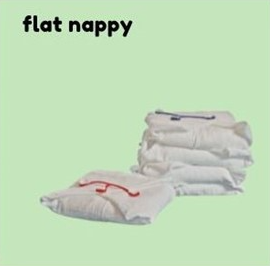
Flat nappies feature flat pieces of absorbent material that are folded and fastened with a nappy fastener or safety pins.
There are different ways you can fold flat nappies, but they are very affordable and quick drying.
Flat nappies need a waterproof cover over the top.
All these types of nappies need a liner - this helps pull the wetness away from your baby and keep them feeling dry. They also help catch the poo. There are two types of liners:
- disposable liner
- washable or fleece liners
If you're unsure which type of reusable nappy to use, you can hire a set to try.
How to store and wash reusable nappies
View the different steps below.
Before you use them for the first time
Before you use reusable nappies for the first time, you will to need to pre-wash them to ensure they are at full absorbency. This means you need to wash them in your machine 3 to 4 times. If you have bought pre-loved you won't need to do this.
Storing used nappies
A lidded bucket is an easy way to store dirty nappies until you have enough to wash.
First step is to remove the poo from the nappy liner:
- for babies under 6 months, poo tends to be runny and water soluble, so will just wash out in the washing machine
- if you're using fleece liners, hold one end tightly and shake off any poo - this will be easier when your baby is weaned and their poo tends to be more solid
- If you're using disposable liners, put the liner in the bin (you can flick off any poo down the loo if you choose but ensure the liner isn't flushed down the toilet)
Washing the nappies
When you have enough nappies (including liners and waterproof covers) to do a wash, you should then:
- load the machine to about three quarters full
- run a rinse or quick wash cycle without detergent - not a prewash, but a separate rinse or quick wash cycle
- then wash at 40 to 60 degrees, preferably for at least 2 hours and using lots of water, and:
- use the 'cotton wash' setting if possible
- avoid the eco wash setting
- don't use fabric softener
Drying the nappies
You should air-dry if possible. If you use a tumble drier, only use the low setting.
Making the switch
Some families trial using reusable nappies by using disposable nappies at night and reusable nappies during the day. As your baby grows and you become more comfortable with the process, you can consider starting to use them more.
If you're not ready to use reusable nappies, you could try using reusable face wipes instead of disposable face wipes.
Benefits
Read about the benefits in the dropdowns below.
Although there will be an initial estimated outlay of £150 to £400 for reusable nappies, they will save you thousands in the long run. Even considering the additional costs for washing.
With up to 5,000 nappy changes up until potty training, that's a lot of money spent on disposables.
A lot of childcare businesses are switching to reusable nappies and wipes, because the potential money-saving is even greater for them, and in multiple-child families.
The actual amount you could save depends on many factors including the:
- brands you use
- way you purchase nappies
Non-biodegradable disposable nappies would take approximately 500 years to degrade in a landfill site. They never disappear, but break down into micro plastics.
The production and transport of them also has a large carbon footprint.
Even with the impact of using your washing machine more, reusable nappies can be 40% better for the environment, as explained in an Environment Agency report from 2008.
Many areas in Bucks now have a restriction on how much general rubbish you can place out for collection, and reducing the number of disposable nappies you use will help reduce your waste.
It may not be considered an environmental benefit, but taking the piles of dirty nappies out of your fortnightly collected bin (which heats up in summer) is also much kinder on your nose!
Disposable nappies are made from plastics, paper pulp, absorbent chemicals and glues which are often considered the cause of nappy rashes.
Some very rudimentary research has indicated that the sale of nappy cream has increased at the same rate as the sales for disposable nappies.
Many families choosing cloth claim to only need these creams during teething or periods of illness.
Reusable nappies can be made from a number of natural and manmade fabrics including cotton, bamboo, hemp and microfiber.
Reusable nappies are fitted to the child and therefore explosive and leaky nappies become a thing of the past.
Reusable nappies, especially the older chunkier styles, are also a good support for your growing child’s hips as they support a deeper ball and socket position - treatment for hip dysplasia can be supported with the use of cloth nappies for this reason. Some also find comfort in the additional support and padding when babies start to walk, falling on their bottom multiple times must feel better with some padding!
Cloth-bottomed babies often potty train earlier due to being able to feel when they are wet and making the connection between feeling wet and their bladder.
It varies a lot depending on the child, but on average children in reusable nappies train 6 months earlier than children in disposables.
Many reusable nappies have colourful designs and feature popular characters like Bluey. They can become a part of a child’s wardrobe as well as being a practical item.
Some prints have become so popular that they are collectors’ items!
Reusable nappy hire
The initial payment for buying reusable nappies can be daunting, so some companies offer a service where you can hire a set of reusable nappies. This can help you decide which type of reusable nappy works best for you. There is usually a fee for hiring, and a refundable deposit.
In addition to nappy hire, you can also attend in-person sessions that are held by The Village Midwife Sling and Nappy Library where you can get:
- support and advice about carrying your baby in a sling or carrier
- support and advice about using reusable nappies
- hire a sling or carrier
View The Village Midwife Sling and Nappy Library website.
Other hire companies include:
Our discount scheme
We have a discount voucher scheme where you can apply for a voucher for a number of retailers. View our discount voucher scheme.
Testimonials
Read these quotes from parents who have made the switch.
Emma said:
"I started looking into cloth nappies when my daughter was a few months old because I was getting annoyed with the bin always being full of nappies! I started off with a few and was very impressed and built up my collection over time, the pocket nappies work for us best as you can choose how absorbent you would like the nappy with the inserts. Now that I've got into a washing routine, it's no bother. I put them on every other evening on a 60 degree wash (with some nappy cleanser) and hang them out before bedtime or in the morning. I don’t have any issue with clothes not fitting over the nappy and the ‘cloth bum’ definitely adds more padding when there’s a tumble! I love all of the different patterns and designs and have bought some of my nappies second hand. I would love to see more reusable nappy usage in the community."
Anika, who has twins said:
"We were aware of cloth nappies but found it tricky at the start with the number of nappies we were getting through with twins.
We tend to use a mix now (it is more work but also trying to balance our environmental impact) - the Buckinghamshire Recycles Cloth Nappy Discount Voucher Scheme certainly helped encourage us to use reusable nappies.
We have also used reusable swim nappies as a result. I'm now keen to avoid disposable nappies completely."
If you need more information
Find out more about the different types, how to fit them and how to wash them on the Go Real website.