
What happens to your waste
View the dropdown sections to read more about different types of waste and what happens to it.
Kerbside mixed recycling is the recycling waste that we produce in our homes and put out to be collected.
Buckinghamshire is one of the best counties in the country for recycling. We recycle thousands of tonnes of waste each year.
Homes have fortnightly collections of recycling and there are 9 household recycling centres which accept waste for recycling.
All of the most common materials produced at home are recycled in Buckinghamshire:
- paper
- cardboard
- plastic bottles, pots, tubs and trays (view more about recycling plastic)
- glass bottles and jars
- metal food and drink tins
- drinks cartons
There are lots more different types of waste that can be recycled at home and at the household recycling centres apart from these. You can use the Waste Wizard to check what you can recycle locally.
What happens to kerbside mixed recycling
After these materials are collected, they are bulked up in Buckinghamshire and sent to UK re-processors to be sorted and separated ready for recycling.
Then they're sent to recycling facilities, the majority of which are UK based, to be made into new products.
Watch this video which shows the general process of how recycling waste is sorted.
The best thing that can happen to food is that it makes it to our plates and is enjoyed.
Avoiding throwing away food that could have been eaten will save you money and help reduce greenhouse gas emissions. However some food waste is inevitable, for example:
- egg shells
- banana skins
- tea bags
The food collected for recycling across Buckinghamshire is turned into energy to power our homes and also a high quality fertiliser for use on agricultural land.
How food waste is recycled
The recycling process for food is called anaerobic digestion. It uses micro-organisms to break down food waste in the absence of oxygen, inside an enclosed system. As it breaks down it releases methane, which is collected and converted into biogas and used to generate electricity. It also creates a nutrient-rich digestate that can be used as a fertiliser for agriculture and in land regeneration.
The anaerobic digestion process
These steps happen in the anaerobic digestion process:
- food waste is delivered to the anaerobic digestion facility
- the waste is tipped into a sealed reception area
- it is ground up and passed into the heated digester tanks
- methane produced in the tanks is used to generate electricity, which is fed into the National Grid to power homes and businesses
- the nitrogen-rich liquid left at the end of the process is then pasteurised and used as farm fertiliser
View more about the anaerobic digestion process on the Olleco website.
Watch the video below to learn more about the process.
Facts about food waste in Buckinghamshire
The facility outside Aston Clinton produces enough electricity by recycling food to power 12,000 homes.
Aylesbury is where all of Buckinghamshires food waste is sent. There are anaerobic digesters at Westcott and Aston Clinton in Buckinghamshire.
16,000 tonnes of food is recycled from Buckinghamshire homes each year.
Compostable garden waste collected from homes across Buckinghamshire or taken to household recycling centres is processed into compost. It can be composted into high quality compost that you may buy at DIY stores, or on a larger scale to be used in Agriculture.
The garden waste is bulked up in Buckinghamshire, to save the bin lorries having to drive long distances. It is then transported to composting facilities.
The process it undergoes is similar to how you might compost at home:
- the garden waste is shredded, mixed and placed into windrows (long piles) along a non permeable surface
- the windrows are turned:
- on a regular basis to improve air flow and make sure heat and moisture levels are even
- multiple times during the composting process, which takes on average sixteen weeks
- finally the compost is screened to remove contaminants (for example plastics and metals) and to also grade it for various uses
Oversized waste materials are also removed and can be put back through the whole process until they have composted down sufficiently.
Facts about garden waste in Buckinghamshire
Garden waste reaches 40 to 60 degrees during the composting process. Hotter than a compost heap at home.
Buckinghamshire, Bedfordshire, Hertfordshire and Oxfordshire is where most garden waste is sent for composting.
12,000 tonnes of garden waste is composted from Buckinghamshire homes each year.
In Buckinghamshire, over 50% of the waste we produce is re-used, recycled or composted, but we still need to dispose of what is left.
Waste that cannot be recycled is no longer sent to landfill. It now goes to Greatmoor Energy from Waste Facility, in the north of the county. It burns the waste to generate electricity for more than 65,000 homes and will save local taxpayers at least £150 million over the next 30 years.
Non-recyclable waste is collected from homes across the county and at the household recycling centres.
Learn more about non-recyclable waste from Greatmoor
The education manager at Greatmoor visits schools and community groups to explain waste reduction and how the facility works. You can also visit Greatmoor yourself to see how we turn non-recyclable waste into electricity.
However, there will always be a need for some disposal and generating electricity from it is better than sending it to landfill.
Facts about non-recyclable waste in Buckinghamshire
Using Greatmoor means we send less than 0.1% of our waste to landfill, one of the best rates in the country.
Greatmoor is north of Aylesbury so all of this waste is kept inside Buckinghamshire.
Up to 120,000 tonnes of waste is sent to Greatmoor each year from households in Buckinghamshire.
There are still things in the general rubbish bin that could have been recycled so we will continue to encourage residents to recycle more.
Recycling glass bottles and jars at recycling centres
Glass brought to the household recycling centres is collected in separate containers sorted by colour, which makes it much easier to recycle.
Once the containers are full, they are emptied into large vehicles to be transported to the glass recycling facility. The different colours of glass are continued to be kept separate.
Once it arrives at the recycling facility it is washed to remove impurities. It is then crushed and melted into new products (for example more bottles and jars). It can also be used for brickwork and tiles.
Glass from kerbside mixed recycling
Glass bottles and jars collected for recycling alongside the food and drink cans and plastics are taken to UK sorting facilities.
Glass bottles and jars are then separated from the rest of the recycling. They are sorted into different colours using optical sorting technology. The glass can then be sent to recycling facilities where it can be made into new products.
Facts about glass bottles and jars in Buckinghamshire
Every tonne of glass that is re-melted saves 246kg of CO2 emissions
All glass from the household recycling centres is sent to Tilbury (in Essex) to be recycled.
200 tonnes of glass is recycled each year at the household recycling centres.
Glass can be recycled endlessly with no loss in quality to the end product.
Plastic bags and wrappers cannot be recycled at home yet. But most supermarkets now have a collection point where you can recycle plastic bags and wrapping.
Most people save up a number of bags, then return them when they do their regular food shop.
The soft plastics are then sent for recycling and reprocessing by each supermarket.
How to recycle plastic bags (Clean it, Scrunch it, Drop it)
The best way to return the plastic bags and wrappers is clean and dry:
- Clean it; first, rinse your packaging
- Scrunch it; then scrunch it up tight, if it pings back, it’s a useful indicator it's soft plastic
- Drop it; put it into the soft plastics recycling unit at a supermarket
Facts about plastic bags and wrapper recycling in Buckinghamshire
8,000 tonnes of soft plastics are thrown in bins at home each year in Bucks, all of which could have been recycled at local supermarkets.
It's not just plastic bags that can be recycled, you can view all the plastic packaging you can recycle at supermarkets on our plastic bags recycling page.
Litter from high street litter bins is sent to Greatmoor to create energy.
Some high streets also have separate recycling bins, the contents of which will get sent to the relevant recycling plant. However if a non-recyclable item is placed in a high street litter bin, the contents will be treated as general waste.
We would always encourage you to take your waste home with you when you are out and about. It's much easier to recycle more when you are at home.
Facts about litter in Buckinghamshire
Over 4,000 litter bins are emptied at least once a week.
2,500 tonnes of litter is collected every year.
3,000km of streets are swept every year.
Batteries are taken to a battery sorting facility where they are sorted into different types depending on the materials they have inside them.
They are packaged and taken to specialist reprocessing plants where they're dismantled using different techniques. This allows the recyclers to extract materials like metal and plastic.
Do not throw them in the bin. Batteries are the biggest cause of fires in the waste industry. They should always be recycled separately.
Read more about recycling batteries and electrical items.
Facts about recycling batteries in Buckinghamshire
41 tonnes of car batteries are also recycled at household recycling centres each year. These are sent to a site in Aylesbury for sorting and further reprocessing.
Batteries collected at the household recycling centres are sent to a facility in Walsall to be recycled.
24 tonnes of batteries are recycled from our household recycling centres each year.
All of our household recycling centres have collection banks for clothes and textiles.
When they're full, the banks are emptied onto a larger vehicle and taken to the sorting facility. Items are sorted and graded several times by highly skilled operators to ensure that only high quality, desirable used clothing is exported to overseas partners.
Approximately 10% of the textiles collected are sold in the UK, the rest go overseas. There is a high demand in Africa, Asia and Eastern Europe.
Some items that are not fit for export can be cut and processed into industrial wiping cloths or classified for fibre reclamation. Items that are heavily soiled (especially paint or oil) and beyond repair cannot be reclaimed. The only option for these items is the bin, sadly, which is why it's so important to care for our clothes. Textiles that are destined for recycling as industrial wipes pass through our high sensitivity metal detector to ensure that they contain no contaminants.
View more information on our 'fast fashion' campaign page.
Repair or resell clothes
Clothes and textiles are easy to repair or resell - you can:
Facts about clothes and textiles recycling in Buckinghamshire
All clothes and textiles are sent to a facility in London.
660 tonnes of clothes and textiles are collected for recycling at our household recycling centres each year.
View more statistics about clothes recycling from one of our reprocessors, ELT Global.
Hardback and paperback books can be donated for reuse at all Household Recycling Centres. Books need to be in good, reusable condition.
Electrical items includes anything with a plug, battery or charger.
Many electrical items can be reused or repaired, but when they can't, you can take them to a specialist electrical waste repairs processor like SWEEEP. Here the items are shredded into small pieces to help the sorting process. Strong magnets are used to remove ferrous metals. An eddy current separator is used to separate non-ferrous metals. Plastics are then separated using near infrared light or density separation. Each raw material is then sent to a recycling facility to be made into something brand new.
Read more about recycling batteries and electrical items.
Facts about electrical recycling in Buckinghamshire
On average, each person in the UK buys almost 3 new electrical items each year – or around 170 million nationally.
Depending on their size electrical items are taken to facilities in Aylesbury, Brentford or Preston to be recycled.
1,600 tonnes of electricals were recycled at the household recycling centres last year.
Paper is collected in separate bins at the household recycling centres. It is then transported to a paper mill where it is separated into type and graded. It is washed to remove film, glue and ink and mixed with water to create a pulp which is made into new paper and card products.
Facts about paper recycling in Buckinghamshire
A newspaper can be recycled and back on the shelf in under a week.
1,000 tonnes of paper was recycled last year at household recycling centres.
Paper from the household recycling centres is sent to a sites in Buckinghamshire, Hertfordshire and Kent to be recycled.
If you are unsure what paper you can recycle use the Waste Wizard to find out.
Large items are taken to High Heavens Waste Transfer Station. This includes items from our household recycling centres (that aren't suitable for the re-use shops) or the council's bulky waste collection service. Examples of bulky waste includes beds, furniture and mattresses.
Any electrical items are separated for recycling, as anything with a plug, battery or charge can be recycled.
The remaining waste (mostly furniture) is shredded before it is transported to Greatmoor Energy from Waste facility. Shredding the waste makes it easier and more efficient to transport.
All staff at household recycling centres are trained to spot items that could be reused and by working with South Bucks Hospice we reused thousands of items each year. Sadly, some items are not suitable for reuse so we need to manage this waste in the best way.
You can reuse old furniture and household items on websites like Freegle.
Facts about bulky waste recycling in Buckinghamshire
All bulky waste is dealt with in Buckinghamshire. Any items that can be reused are re-sold in Buckinghamshire and the rest goes to Greatmoor.
6,000 tonnes of bulky waste is produced each year from Buckinghamshire homes.
Cardboard is collected in separate bins at the household recycling centres. It is then transported to a cardboard mill where it is separated into type and graded. It is washed to remove film, glue and ink and mixed with water to create a pulp which is made into new paper and card products.
Facts about cardboard recycling in Buckinghamshire
A newspaper can be recycled and back on the shelf in under a week.
2,500 tonnes of cardboard was recycled last year at household recycling centres.
Cardboard from the household recycling centres is sent to a sites in Buckinghamshire, Hertfordshire and Kent to be recycled.
If you are unsure what cardboard you can recycle use the Waste Wizard to find out
Soil, rubble, hardcore and other similar materials are accepted at household recycling centres.
The material is inert (which means it does not undergo any significant physical, chemical or biological transformations) and can be used for landscaping in large projects.
Locally the material is used as a covering layer at a landfill site. This material is used to cover waste dumped in the landfill each day and helps manage landfill sites safely and reduces the impact on the local environment.
Facts about soil and rubble recycling in Buckinghamshire
Using soil and rubble from local homes to landscape the landfill saves transporting materials long distances.
All soil and rubble collected at household recycling centres in Buckinghamshire is sent to be used in Calvert, Buckinghamshire.
3,000 tonnes of soil and rubble is produced each year from Buckinghamshire homes.
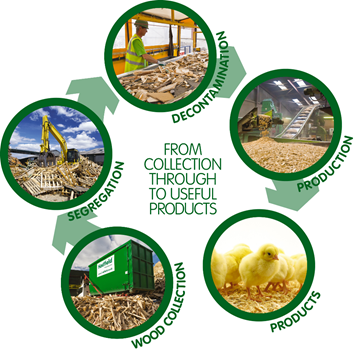
Wood and timber is transported to a wood recycling facility where contaminants are removed. The wood is then broken down and manufactured into a new products such as animal bedding and feedstock for panel board.
Even though it can be recycled, it is still a costly process to store, transport, sort and reprocess wood for other. Wood can often be reused or donated to local groups like Men in Sheds to use on projects.
Facts about wood and timber recycling in Buckinghamshire
Recycling wood helps to reduce negative environmental impact because it lessens the need to cut down trees. This is because the process of recycling wood requires less energy consumption than making new products from virgin materials.
The wood collected at household recycling centre's is taken to a facility in Essex for recycling.
6,500 tonnes of wood and timber were collected at household recycling centres.
Engine oil is collected at all 9 household recycling centres in Buckinghamshire.
Once the separate containers are full, a collection wagon visits and empties the oil into a large tank. It is then transported to a facility in Ipswich. The used oil we collect is reprocessed into a base oil product. This product is then used in the production of new carbon efficient lubricating oils, emitting 30% less CO2 than alternative lubricating oils produced from crude oil.
Facts about engine oil recycling in Buckinghamshire
The oil collected at our sites each year is equivalent to about 18,000 oil changes.
All engine oil collected at household recycling centres in Buckinghamshire is sent to Ipswich.
58 tonnes of used engine oil is produced each year from Buckinghamshire homes
Printer cartridges and toners are taken to a specialist facility where they are graded and recovered for reuse, or are broken-down into their raw material form for recycling.
Approximately 55% of the cartridges collected are reused with the remaining 45% being recycled, so nothing goes to waste.
Facts about printer cartridge recycling in Buckinghamshire
Many print shops offer cartridge refill schemes, not only is this a better choice for the environment, it is cheaper too!
All engine oil collected at household recycling centres in Buckinghamshire is sent to a facility in Littlehampton.
1 tonne of printer and toner cartridges are produced each year from Buckinghamshire homes.
Fridges and freezers are recycled separately from other large electrical appliances.
They are brought to household recycling centres and also through the council's bulky waste collections.
They are recycled separately to other electricals because they contains ozone depleting substances, such as CFC's which must be removed at the beginning of the recycling process. These are extracted via a fridge compressor, where the oil and coolant are separated. The compressors, now drained, are removed and recycled as a material.
Facts about fridge and freezer recycling in Buckinghamshire
More than 3.5 million old fridges are thrown away in the UK every year. And the number is growing.
The fridges and freezers are sent to a specialist facility in Edmonton, London.
550 tonnes of fridges and freezers are brought to household recycling centres and collected on bulky waste collections.
Fluorescent tubes are collected at all 9 household recycling centres in Buckinghamshire.
They are classed as hazardous waste due to the potential dangers of broken glass and also the inhalation of small amounts of toxic materials released as dust and vapour. So it's important that they're recycled correctly and never put it your general waste bin.
Fluorescent tubes contain about 94% Glass, 4% ferrous and non-ferrous metals, and 2% phosphor powder. Phosphor powder contains the most hazardous element here; mercury.
This recycling process involves separating the individual components and recovering them for recycling or re-use. A distiller is used to purify the mercury into various grades. The recovered mercury is sent to two major lamp manufacturers in the UK where it is used in the production of new lamps.
Facts about fluorescent tube recycling in Buckinghamshire
The mercury from 1 single fluorescent tube is enough to pollute 30,000 litres of water beyond the safe drinking level in the UK.
The end destination is Manchester.
3.78 tonnes collected each year.
We have BRITA filter containers at Aylesbury, Aston Clinton, Beaconsfield, Amersham and Wycombe recycling centres.
Once the containers are full, they are taken back to the BRITA headquarters, using the same lorries that deliver new filters. Doing this goes a long way to cut their carbon emissions. Then a refined process ensures all parts of BRITA cartridges are properly reused or recycled.
Facts about BRITA water filter recycling in Buckinghamshire
The carbon footprint of one litre of BRITA Filtered water is 25 times smaller than that of bottled water.
All filters are taken back to the original factory where they were made in Taunusstein, Germany. This ensures they can be fully recycled.
Large metal household items can be brought to all household recycling centres for recycling. Metal is one of the easiest metals to recycle and uses up much less resources than making it from raw materials.
There are thousands of uses of recycled metal whether it's drinks cans or car parts from aluminium, bike frames or bridges from steel and even musical instruments from copper.
Most metals keep their quality through multiple recycling processes, so an old bed frame could be recycled again and again without the need for new materials.
Facts about scrap metal recycling in Buckinghamshire
Recycling metal can save up to 95% of the energy it takes to make it from raw materials.
Buckinghamshire is the destination for all the scrap metal collected at household Recycling Centres.
2,500 tonnes of scrap metal is recycled from our homes each year.
Plasterboard can only be taken to some of our household recycling centres:
Once collected the plasterboard is sent for processing where it is broken into different parts:
Gypsum; which is the main component of plasterboard and gives it the fire resistance quality. This makes up approx. 85% of plasterboard and is sent to be either; manufactured into new plasterboard, to agriculture as a soil conditioner/fertiliser, absorbency markets such as cat litter and fuel spillages, or cement manufacturing
Paper; this is sent to make animal bedding or composting.
Metal; this is sent to scrap.
Wood; this is sent to make fuel for Biomass boilers.
Plasterboard is banned from going to landfill which is why is has to be separately collected.
Facts about plasterboard recycling in Buckinghamshire
Plasterboard is initially sent to Totternhoe, then onto Thruxton in Hampshire for processing.
109.82 tonnes of plasterboard is collected for processing each year. And 99.18% of that material is recovered with the remaining 0.82% going to Energy from Waste plants.
You can recycle coffee pods at recycling centres.
They're collected by Podback and then sent to specialist recycling plants in the UK:
- Yorkshire for plastic pods
- Cheshire for aluminum pods
At both sites, the pods are shredded to remove the coffee.
The coffee grounds are sent to food waste processing plants where they are turned into biogas and soil improver for local farmers.
The plastic pods are used for building products, like buckets and packaging crates.
The aluminium pods are used for drink cans and car components.